Lunar eclipses and moon phases have fascinated humanity for centuries, intertwining scientific phenomena with deep spiritual meanings. This article delves into the various phases of the Moon, the occurrence of lunar eclipses, and their spiritual significance across cultures, offering a comprehensive understanding of these celestial events.
The Phenomenon of Lunar Eclipses
The Moon’s phases unfold in a beautiful cycle dictated by its position relative to the Earth and the Sun. This celestial ballet produces eight distinct stages: new moon, waxing crescent, first quarter, waxing gibbous, full moon, waning gibbous, last quarter, and waning crescent. Each phase not only captivates the eye but also carries deep spiritual and astronomical significance.
During the **new moon**, the Moon is obscured from view, symbolizing new beginnings and inner reflection. As it waxes into a **crescent**, the sliver of illuminated surface can inspire hope and potential. The **first quarter** marks a period of decision-making, while the **waxing gibbous** phase encourages the pursuit of goals. When the Moon reaches its **full moon** phase, it radiates energy, often associated with heightened emotions, clarity, and culmination.
As the Moon transitions into its waning phases, it invites introspection. The **waning gibbous** is a time for gratitude and release, followed by the **last quarter**, which encourages letting go of old habits, and finally, the **waning crescent**, a period for rest and recharge.
These phases influence not just the tides, but also human behavior and natural cycles, reflecting an intrinsic connection to the universe. Ancient cultures revered these phases, linking them to agricultural practices, spiritual rituals, and seasonal changes, confirming that the phases of the Moon are more than just a science; they are a profound part of the human experience.
Understanding Moon Phases
The Moon’s phases are a stunning representation of its position in relation to the Earth and the Sun, a celestial dance that unfolds over approximately 29.5 days. These phases arise from the sunlight reflecting off the Moon’s surface as it orbits our planet, creating eight distinct stages:
– **New Moon**: During this phase, the Moon is positioned between the Earth and the Sun, rendering it nearly invisible to observers on Earth. This is traditionally seen as a time for new beginnings and setting intentions.
– **Waxing Crescent**: The crescent shape begins to appear as a sliver of light, symbolizing growth and manifestation, often associated with creativity and inspiration.
– **First Quarter**: Half of the Moon is illuminated, signaling a time of action and decision-making, inviting us to take steps toward our goals.
– **Waxing Gibbous**: As the Moon continues to swell, it encourages further development and refinement of endeavors already started, carrying an energy of anticipation.
– **Full Moon**: This phase represents culmination and fulfillment, where intentions set during the New Moon come to fruition. The energy during this time often leads to heightened emotions and may foster introspection.
– **Waning Gibbous**: Following the peak of the full moon, this phase nudges us toward gratitude and reflection, allowing for the release of what no longer serves us.
– **Last Quarter**: With half of the Moon illuminated again, it’s a call for reassessment and closure, making way for new cycles.
– **Waning Crescent**: As the Moon retreats into darkness, this phase embodies rest and introspection, preparing us for regeneration.
These phases profoundly influence not just the rhythms of nature, including tides and animal behaviors, but also human emotions and actions. Many cultures have recognized these patterns for generations, observing how the Moon’s light and shadow can inspire both reflection and activity, marking the ebb and flow of life itself.
Spiritual Meanings and Cultural Significance
Lunar eclipses and the various phases of the Moon hold profound spiritual significance across diverse cultures. Often viewed as celestial markers, lunar eclipses are perceived as powerful times of transition and transformation. In many traditions, these events symbolize the shedding of old energies to make way for new beginnings. For instance, in ancient Chinese culture, a lunar eclipse was attributed to a dragon consuming the Moon, representing an omen of significant change and a call to reflect on one’s life journey.
The phases of the Moon, from the delicate crescent to the full, mirror the rhythms of human emotions and experiences. Many cultures link the waxing phases of the Moon with growth and intention-setting, while the waning phases are seen as optimal for release and reflection. This interplay is evident in agricultural practices: many farmers still plant crops during the waxing Moon for better yield, while harvesting occurs during the waning phase, aligning with natural cycles for nourishment and decomposition.
Folklore also enriches the spiritual tapestry surrounding the Moon. For instance, various mythologies attribute lunar cycles to goddesses of fertility and transformation, emphasizing the Moon’s influence on femininity and intuition. In many spiritual traditions, the Moon serves as a guide for personal introspection and connection to the cosmos, encouraging reflection on one’s path during both eclipses and transitions between moon phases.
Harnessing Lunar Energy for Personal Growth
Harnessing the energy of lunar eclipses and the various moon phases can be a profound tool for personal growth and spiritual development. Each phase of the moon presents unique opportunities for introspection, release, and manifestation, allowing individuals to align their intentions with the natural rhythms of the universe.
During the **New Moon**, a time for new beginnings, set intentions for what you wish to cultivate in your life. Engage in a ritual by writing down your aspirations and then burying or burning the paper as a symbolic act of planting seeds.
As the moon waxes to the **First Quarter**, use this phase to take action. Reflect on your intentions and identify practical steps to bring them to fruition. Meditation focused on courage and empowerment can fortify your resolve.
At the **Full Moon**, the peak of lunar energy, it’s a perfect moment to celebrate achievements and release what no longer serves you. A powerful ritual may involve a cleansing bath or creating a moon altar where you express gratitude and let go of negativity through a guided meditation or journaling.
Finally, during the **Waning Moon**, a period for contemplation and closure, engage in quiet reflection. Create space for introspection by practicing deep meditation or using this time for decluttering your physical and emotional space.
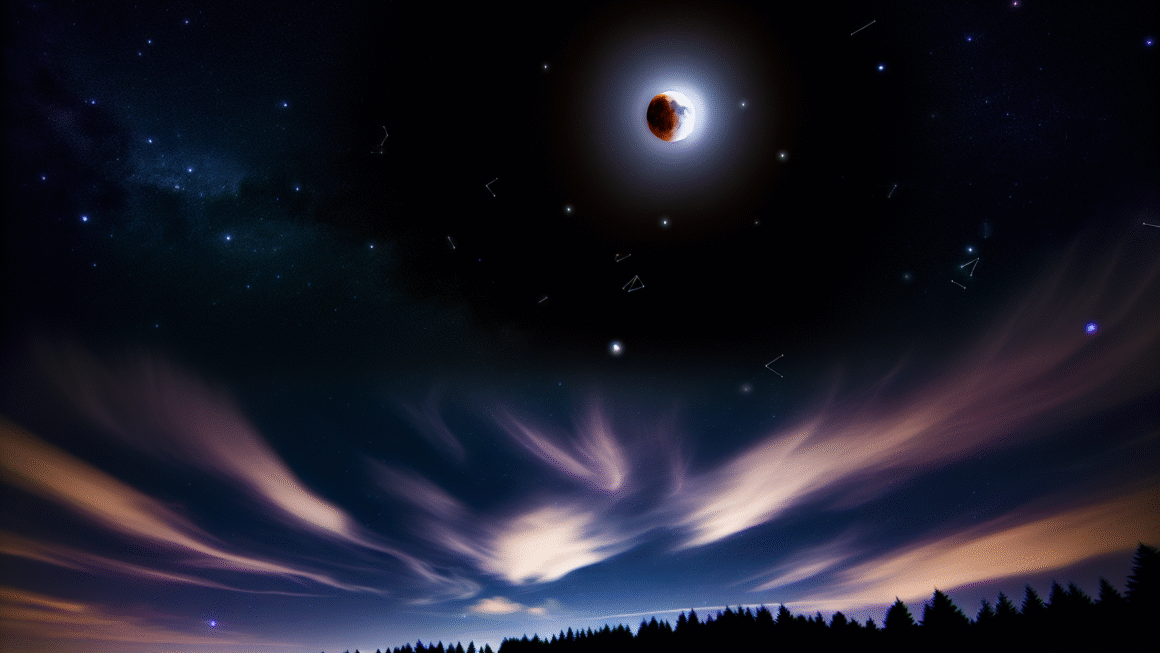
Lunar eclipses, as pivotal cosmic events, offer moments of heightened energy. They can be opportunities for transformation; consider conducting a personal review, examining areas of your life that require change, and embracing the eclipses’ potential for powerful shifts. By consciously engaging with the moon phases and eclipses, you can harness their energy to enrich your spiritual journey and emotional well-being.
Conclusions
Lunar eclipses and moon phases are not just celestial events but are deeply entwined with human spirituality and culture. By understanding their astronomical mechanisms and spiritual significance, we can better appreciate their role in our lives and harness their energy for personal transformation and growth.